Understanding Water Quality Parameters
Understanding Water Quality Parameters
Maintaining proper water quality is essential for the health and well-being of your aquatic life. This guide will help you understand the key parameters you should monitor and how to maintain them.
The Nitrogen Cycle
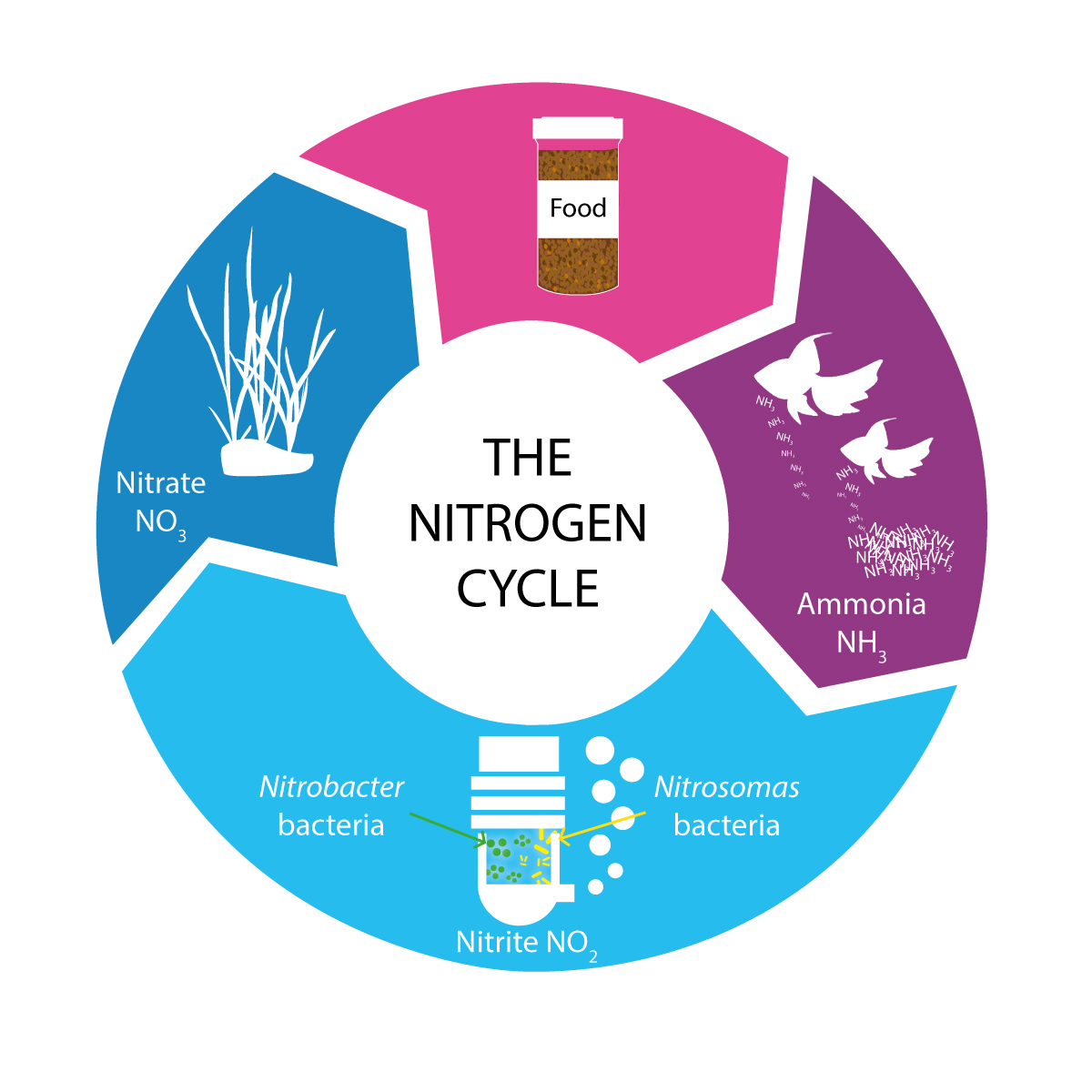
The nitrogen cycle is the foundation of a healthy aquarium. Understanding this process is crucial for any aquarist:
- Fish waste and uneaten food break down into ammonia (NH3)
- Beneficial bacteria convert ammonia into nitrite (NO2)
- Different bacteria convert nitrite into nitrate (NO3)
- Water changes and plants remove nitrate
This cycle takes 4-6 weeks to establish in new tanks (called "cycling"). Never add fish until the cycle is complete!
Critical Parameters
Ammonia (NH3)
What it is: Toxic waste product from fish, uneaten food, and decaying matter.
Why it matters: Extremely toxic! Even small amounts can burn fish gills and cause death.
Safe Ranges:
- Freshwater: 0 ppm
- Saltwater: 0 ppm
How to correct high levels:
- Immediate 50% water change
- Stop feeding for 24 hours
- Check filter function
- Add beneficial bacteria supplement
- Test daily until 0 ppm
Testing frequency: Daily in new tanks, weekly in established tanks
Nitrite (NO2)
What it is: Intermediate product in the nitrogen cycle, created when bacteria break down ammonia.
Why it matters: Highly toxic! Prevents fish from absorbing oxygen, causing suffocation.
Safe Ranges:
- Freshwater: 0 ppm
- Saltwater: 0 ppm
How to correct high levels:
- 50% water change immediately
- Add aquarium salt (1 tablespoon per 5 gallons) for freshwater
- Reduce feeding
- Ensure good aeration
- Test daily until 0 ppm
Testing frequency: Daily in new tanks, weekly in established tanks
Nitrate (NO3)
What it is: End product of the nitrogen cycle, less toxic than ammonia or nitrite.
Why it matters: High levels promote algae growth and can stress fish over time.
Safe Ranges:
- Freshwater: 0-20 ppm
- Saltwater: 0-20 ppm (corals prefer <10 ppm)
How to correct high levels:
- Regular water changes (25% weekly)
- Add live plants (they consume nitrate)
- Reduce feeding
- Clean substrate and filter
- Consider a refugium (saltwater)
Testing frequency: Weekly
Temperature
What it is: Water temperature measured in Celsius or Fahrenheit.
Why it matters: Fish are cold-blooded and depend on water temperature for metabolism. Wrong temps cause stress and disease.
Safe Ranges:
- Freshwater: 20-30°C (68-86°F)
- Saltwater: 23-28°C (73-82°F)
How to adjust:
- Too cold: Add aquarium heater
- Too hot: Add fan, chiller, or ice packs (emergency)
Testing frequency: Daily
pH (Acidity/Alkalinity)
What it is: Measures how acidic or alkaline your water is on a scale of 0-14.
Why it matters: Fish are adapted to specific pH ranges. Sudden changes can cause stress or death.
Safe Ranges:
- Freshwater: 6.0-8.5
- Saltwater: 7.8-8.6
How to adjust:
- Lower pH: Add driftwood, peat moss, or pH-down products
- Raise pH: Add crushed coral, limestone, or pH-up products
Testing frequency: Weekly
General Hardness (GH)
What it is: Measures dissolved minerals (calcium and magnesium) in water.
Why it matters: Fish and plants need minerals. Some species require soft water, others hard water.
Safe Ranges:
- Freshwater: 2-20 dGH
- Saltwater: 2-20 dGH
How to adjust:
- Increase: Add crushed coral or GH booster
- Decrease: Use RO water or peat moss
Testing frequency: Monthly
Carbonate Hardness (KH/Alkalinity)
What it is: Measures water's ability to resist pH changes (buffering capacity).
Why it matters: Stable KH = stable pH. Low KH causes pH crashes.
Safe Ranges:
- Freshwater: 1-15 dKH
- Saltwater: 6-13 dKH
How to adjust:
- Increase: Add baking soda or KH buffer
- Decrease: Use RO water
Testing frequency: Monthly
Phosphate (PO4)
What it is: Nutrient that enters through food, waste, and tap water.
Why it matters: High levels fuel algae blooms.
Safe Ranges:
- Freshwater: 0-2.0 ppm
- Saltwater: 0-0.3 ppm
How to correct high levels:
- Water changes
- Reduce feeding
- Use phosphate remover media
- Add fast-growing plants
Testing frequency: Monthly, or weekly if algae problems
Saltwater-Only Parameters
Salinity
What it is: Amount of dissolved salt in water, measured in ppt or specific gravity.
Why it matters: Marine life requires specific salinity levels.
Safe Range: 32-37 ppt (1.023-1.027 specific gravity)
How to adjust:
- Too low: Add marine salt mix
- Too high: Add RO/DI water
Testing frequency: Weekly
Calcium (Ca)
What it is: Essential mineral for coral skeleton and shell formation.
Why it matters: Corals and invertebrates need calcium to grow.
Safe Range: 350-500 ppm
How to adjust:
- Add calcium supplements
- Use kalkwasser or calcium reactor
Testing frequency: Weekly for reef tanks
Magnesium (Mg)
What it is: Mineral that works with calcium and alkalinity.
Why it matters: Prevents calcium and alkalinity from precipitating out.
Safe Range: 1100-1500 ppm
How to adjust:
- Add magnesium supplements
- Use balanced reef salt mix
Testing frequency: Bi-weekly for reef tanks
Alkalinity (dKH)
What it is: Buffering capacity and carbonate availability for corals.
Why it matters: Corals need carbonates to build skeletons.
Safe Range: 6-13 dKH (8-11 ideal for most reefs)
How to adjust:
- Add alkalinity buffer
- Use two-part dosing system
Testing frequency: 2-3 times per week for reef tanks
Testing Schedule Recommendations
New Tank (First 6 Weeks)
- Daily: Ammonia, Nitrite, Temperature
- Weekly: Nitrate, pH
Established Freshwater Tank
- Daily: Temperature
- Weekly: Ammonia, Nitrite, Nitrate, pH
- Monthly: GH, KH, Phosphate
Established Saltwater Tank
- Daily: Temperature
- Weekly: Ammonia, Nitrite, Nitrate, pH, Salinity
- 2-3x per week: Alkalinity (reef tanks)
- Weekly: Calcium, Magnesium (reef tanks)
- Monthly: Phosphate
New Tank Syndrome
What is it? The dangerous period when a new tank hasn't established beneficial bacteria yet.
Symptoms:
- Ammonia and nitrite spikes
- Fish gasping at surface
- Lethargy and loss of appetite
- Fish deaths
Prevention:
- Cycle tank BEFORE adding fish (4-6 weeks)
- Add beneficial bacteria starter
- Start with hardy fish species
- Add fish slowly (2-3 per week)
- Test water daily
Treatment if it happens:
- Immediate 50% water change
- Stop feeding
- Add beneficial bacteria
- Consider temporary fish removal
Common Problems & Solutions
Problem: Cloudy Water
Causes: Bacterial bloom, overfeeding, poor filtration Solutions: Reduce feeding, increase filtration, wait (usually clears in 2-3 days)
Problem: Green Water
Causes: Algae bloom from excess nutrients and light Solutions: Reduce light hours, water changes, add plants, reduce feeding
Problem: Fish Gasping at Surface
Causes: Low oxygen, high ammonia/nitrite, high temperature Solutions: Increase aeration, test water, water change if needed, lower temperature
Problem: pH Keeps Dropping
Causes: Low KH, too much CO2, decaying matter Solutions: Increase KH, improve aeration, remove debris, add buffer
Problem: Persistent Algae
Causes: Excess nutrients, too much light, imbalanced tank Solutions: Reduce light to 6-8 hours, increase water changes, add algae eaters, test phosphate and nitrate
Key Takeaways
- Test regularly - Prevention is easier than treatment
- Make changes slowly - Sudden changes stress fish
- Keep a log - Track trends over time using AquaLog
- Water changes are king - Solve most problems
- Patience pays off - Stable tanks take time to establish
- Know your species - Different fish have different needs
Remember: A healthy aquarium is a balanced ecosystem. Regular testing and maintenance will keep your aquatic friends thriving!
Have questions about water quality? Contact our support team or visit the Help Center for more information.
⚠️ Disclaimer
The information provided in this article is intended as a general guideline for aquarium keeping based on widely accepted practices in the hobby. Water parameter requirements can vary significantly depending on species, tank setup, local water conditions, and individual circumstances.
AquaLog and its contributors are not responsible for any loss of aquatic life, livestock, or equipment resulting from the application or misapplication of the information presented here. These guidelines reflect general facts about aquarium keeping and should not be taken as professional veterinary or aquatic science advice.
Always research the specific needs of your fish and invertebrates, consult with an experienced aquarist or professional when in doubt, and use your best judgment when making changes to your aquarium. By using AquaLog and its educational content, you agree to our Terms of Service.